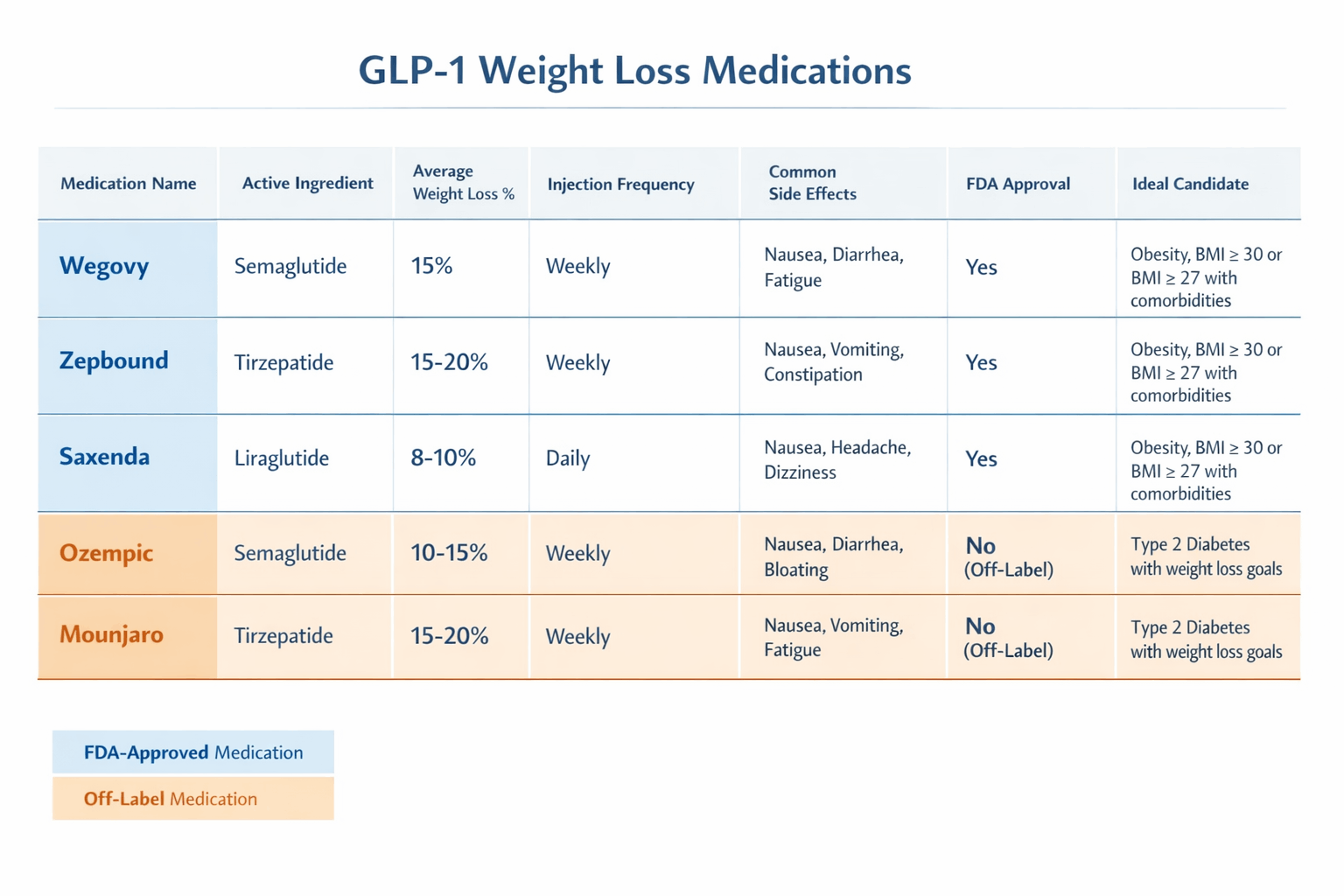
Comparison Chart: Which GLP-1 Is Best for Weight Loss?
This comparison makes one thing clear. There is no single winner for everyone. The best GLP-1 depends on your body, your goals, and how your system responds to treatment.
If you have been trying to figure out which GLP-1 is best for weight loss, you are not alone. Many people start with a simple question and quickly end up overwhelmed. One website claims Wegovy is the top choice. Another says Mounjaro leads to faster results. Social media adds even more noise, often without real medical context. It can feel confusing, especially when you are just looking for something that will actually work for you.
Part of the confusion comes from the fact that there are multiple GLP-1 medications available, and each has strong clinical data behind it. For example, studies published in The New England Journal of Medicine show that semaglutide users lost an average of about 15 percent of their body weight, while tirzepatide users lost up to 21 percent in clinical trials. You can review these findings directly from trusted sources like the NEJM semaglutide trial and the NEJM tirzepatide SURMOUNT-1 study.
But numbers alone do not tell the full story. These results are averages, not guarantees. In real-world medical practice, response to GLP-1 drugs varies widely. Some people see steady weight loss with minimal side effects, while others struggle with nausea or plateau early. Factors like BMI, insulin resistance, existing health conditions, and medication tolerance all matter.
That is why this comparison goes beyond headlines. This guide breaks down the key GLP-1 options, explains how they differ, and helps you understand which medication may be the best fit for your situation, not just which one performed best in a study.
If weight loss has ever felt harder than it should be, it is not just about willpower. For many people, the problem starts inside the body. This is where GLP-1 medications come in.
GLP-1 stands for glucagon-like peptide-1. It is a hormone your body naturally releases after you eat. Its job is simple but powerful. It tells your brain that you are full, helps control blood sugar, and slows down how fast food leaves your stomach. GLP-1 medications are designed to copy this natural process, but in a stronger and more consistent way.
One of the biggest reasons people lose weight on GLP-1 drugs is reduced appetite. Studies show that GLP-1 medications act on appetite centers in the brain, helping people feel satisfied with smaller portions. This effect has been well documented by organizations like the National Institutes of Health, which explains how GLP-1 receptor agonists reduce hunger and food intake.
GLP-1 drugs also help with blood sugar control, which is especially important for people with insulin resistance or type 2 diabetes. More stable blood sugar levels mean fewer cravings and energy crashes throughout the day, according to the American Diabetes Association.
Another key factor is slower gastric emptying. Food stays in the stomach longer, so fullness lasts longer after meals. This makes it easier to eat less without constantly feeling hungry.
Together, these effects explain why GLP-1 medications can support meaningful weight loss when used under medical supervision.
GLP-1 (glucagon-like peptide-1) medications are drugs that mimic the body’s natural hormone to reduce appetite, control blood sugar, and slow gastric emptying.
How They Work:
Appetite Suppression: GLP-1 acts on brain centers to increase fullness and reduce hunger.
Blood Sugar Regulation: Helps stabilize insulin and glucose, reducing cravings.
Slowed Gastric Emptying: Food stays in the stomach longer, extending the feeling of fullness.
Once you understand how GLP-1 medications work, the next natural question is simple. Which one actually works best? This is where many people feel stuck, because not all GLP-1 drugs are approved the same way, and not all are prescribed for the same reasons.
Some medications are FDA-approved specifically for weight loss, while others are approved for diabetes but are commonly prescribed off label for weight management. Knowing the difference matters, especially when safety, insurance coverage, and long-term use are involved.FDA-Approved GLP-1 Drugs for Weight Loss
Wegovy (semaglutide)
Wegovy is one of the most widely prescribed GLP-1 drugs for obesity. Clinical trials published in The New England Journal of Medicine showed an average weight loss of about 15 percent of body weight over 68 weeks.
Zepbound (tirzepatide)
Zepbound is the newest FDA-approved option for weight loss. In the SURMOUNT-1 trial, participants lost between 15 percent and 21 percent of their body weight, depending on the dose.
Saxenda (liraglutide)
Saxenda is an earlier GLP-1 medication that requires daily injections. Studies show average weight loss of around 5 to 8 percent, which may suit people who need a gentler approach.Off-Label GLP-1 Medications Used for Weight Loss
Ozempic (semaglutide)
Ozempic uses the same active ingredient as Wegovy but is FDA-approved for type 2 diabetes, not weight loss. Many doctors prescribe it off label due to similar appetite-suppressing effects.
Mounjaro (tirzepatide)
Mounjaro is approved for diabetes but often prescribed off label for weight loss because it delivers results similar to Zepbound.
This comparison makes one thing clear. There is no single winner for everyone. The best GLP-1 depends on your body, your goals, and how your system responds to treatment.
After reviewing comparisons, most people realize something important. The real question is not which GLP-1 works best overall, but which one works best for your goal and your body. Clinical data helps guide decisions, but outcomes depend heavily on individual factors.
Two people can take the same GLP-1 medication and have very different experiences. This happens because weight loss response varies based on several factors, including BMI, metabolic health, past medication use, and how sensitive someone is to side effects. The same drug does not produce the same result for everyone.
Medical supervision plays a critical role here. Proper screening, dose planning, and follow-up reduce risks and improve outcomes. This is where personalization changes everything.
Programs like the personalized GLP-1 program by Medvi focus on matching the right medication and dose to the individual, rather than forcing a one-size-fits-all approach. With clinician guidance and ongoing monitoring, decisions become safer and more effective.
Most GLP-1 side effects are gastrointestinal. Common issues include nausea, vomiting, bloating, and constipation, especially during early treatment. Research shows that slow dose escalation significantly reduces these effects.
GLP-1 drugs may not be suitable for people with a history of medullary thyroid cancer, certain endocrine disorders, or severe gastrointestinal disease. Regular monitoring helps catch issues early and ensures the treatment remains appropriate over time.
Common Side Effects: Nausea, vomiting, diarrhea, constipation
Risk Reduction: Slow dose escalation helps tolerance
Who Should Avoid: History of medullary thyroid cancer, severe GI disease
Monitoring: Regular check-ins ensure safety and effectiveness
Cost is often a deciding factor. Insurance coverage varies widely depending on the medication, diagnosis, and plan. FDA-approved weight loss drugs are more likely to be covered than off-label options, but this is not guaranteed.
Some patients explore compounded alternatives, though quality and regulation can vary. Long-term affordability matters because GLP-1 therapy works best when treatment is consistent and sustainable. Because pricing varies by medication, dosage, and whether branded or compounded options are used, many people want clarity before starting treatment. Reviewing a detailed breakdown of membership fees, medication costs, and billing policies can help avoid surprises later. You can explore this in our guide on how much Medvi costs per month, which explains pricing across different GLP-1 options and insurance scenarios.
Coverage depends on insurance and FDA approval
Brand vs compounded options may affect cost and quality
Long-term adherence matters for sustained results
There is no single best GLP-1 drug for everyone. The most effective option is the one that fits your health profile, goals, tolerance, and lifestyle.
When guided by medical expertise and personalization, GLP-1 therapy becomes a strategic decision rather than a gamble. For many people, doctor-guided personalization leads to better results than chasing the highest numbers alone.
GLP-1 medications are drugs that mimic the body’s natural glucagon-like peptide-1 hormone. They help reduce appetite, control blood sugar, and slow stomach emptying, which can support weight loss when used under medical supervision.
Clinical studies show that tirzepatide can reduce body weight by up to 21 percent, while semaglutide averages around 15 percent. The best option depends on your individual goals, health profile, and tolerance.
Most people tolerate GLP-1 medications well. Common side effects include nausea, vomiting, and mild digestive discomfort. Slow dose escalation and regular medical supervision reduce risks. People with certain conditions, like medullary thyroid cancer, may need to avoid them.
Yes. Many GLP-1 medications, like semaglutide and tirzepatide, help control blood sugar while supporting weight loss. Your doctor will guide dosing based on both weight and diabetes management needs.
Yes, currently all GLP-1 drugs are injectable. Some are weekly injections (Wegovy, Ozempic, Zepbound, Mounjaro) and some are daily injections (Saxenda). Your healthcare provider can help choose the schedule that fits your lifestyle.
Responses vary based on BMI, metabolic health, prior medication use, and side-effect tolerance. A personalized plan ensures you get the most benefit safely. Programs like the 👉 personalized GLP-1 program by Medvi provide clinician-guided support for tailored results.
Coverage depends on the drug, FDA approval for weight loss, and your insurance plan. FDA-approved options like Wegovy, Zepbound, and Saxenda are more likely to be covered than off-label medications.

Medvi